 The Lower Mpushini Valley Conservancy will be holding its annual Ashburton Aloe Festival over the weekend of the 5th and 6th July. The festival is timed to coincide with the flowering of the magnificent Aloe candelabra which put on a majestic display in this beautiful bushveld area just east of Pietermaritzburg.
Our line-up of expert talks include Steve Woodall "Planting for Butterflies", Sithembiso Sangweni "Guided walk and talk on alien invasive weed eradication", Nick May "A Living Geology", Howard Bradshaw "Stories of Herman Charles Bosman" Pandora Long & Catherine Fennel P.E.A.C.E. Project Permaculture Production Garden "Story of a Garden" Granton Law "For the Love of Indigenous Plants" and Pat McKrill "Getting to know the Neighbours" See the full programme hereunder for details.
Five venues will be open to the public between 9am and 4pm. Tickets to visit all the venues for the duration of the weekend are R30 for adults and children under 12 are free.
• Venue 1 Galago Farm Pandora Long will host the conservancy tea garden under the sweet thorn trees alongside the Mpushini River. BotSoc speaker Steve Woodhall will be sharing his facinating talk, "Planting for Butterflies" at Galago on Saturday 5th July at 10am. Visitors can walk and talk with Sithembiso Sangweni about the problem of alien invasives and view the eradication clearing work that is being undertaken here in the riverine area. Visitors can enjoy two self-guided trails, the special 'Euphorbia trail' a circular 1 hour moderate walk and Tufty's trail, a short loop of under 30min or link to Toprock. Galago will be hosting 'Art under the Trees' and a campfire from 4pm on Saturday with Howard Bradshaw's "Stories of Herman Charles Bosman". On Sunday morning at 10am Pandora Long will introduce the Galago Centre for P.E.A.C.E. Project and Catherine Fennell will present "The Story of a Garden".
• Venue 2 Toprock Museum Nick and Nicole May will open their Palaeontology Museum and Minerals, Crystals and Gemstone Shop where you will see one of the largest collections of fossils and minerals in the world! There will be a feast of arts and crafts stalls, live music with Paul and students from Marshall's music and fire dancing. Also at Venue 2, Bill and Pam Kelland of Bundu Bistro will serve breakfast, lunch and refreshments from the beautiful rustic African style restaurant deck set right into the heart of the bushveld. Here Nick May will give an exciting talk "A Living Geology" on Saturday 5th July at 2pm.
• Venue 3 At Impala Bend hosts, Keith and Kathy Brown will serve their delicious festival light lunches and drinks from the game viewing deck at 'The Waterhole' accompanied by light music. Indigenous Plant guru, Granton Law of Valea-Vista Indigenous Nursery will be at Impala Bend with his warm smile and excellent selection of indigenous plants. On Sunday 6th at 12 noon, Granton will share a talk "For the Love of Indigenous Plants" with festival visitors and at 2pm snake expert Pat McKrill will present his talk "Getting to Know the Neighbours!". This venue also hosts stalls, African craft and two self guided walking trail with an amazing view through the most beautiful Aloe candelabra country! On Saturday Ponys4parties will offer pony rides at Impala Bend.
• Venue 4 Rocky Wonder Aloe Nursery - Here, the new owners Peter and Heather Poulsen will welcome you to this beautiful farm with over 200 African Aloes on display in the specially created feature rockery overlooking the valley. A large variety of indigenous aloe species are available for sale at special festival prices!
• At Venue 5 Spencers Place, a self-guided birding trail through the fully flowering Aloes opens from 6am.
The Lower Mpushini Valley Conservancy is home to a wide variety of animal, bird and insect life and consists largely of pristine Eastern valley Bushveld with high biodiversity and a number of protected species. The area is also one of the butterfly "hotspots" where numerous species of these beautiful creatures can be seen. Long term conservation efforts have been very successful and the area was proclaimed a Protected Environment under the Ezemvelo KZN Wildlife Stewardship Programme in February 2011, the first such community Protected Area in KZN. The Lower Mpushini Valley forms part of a Biosphere Conservation Corridor Initiative for the Eastern Periphery of Pietermaritzburg. All funds raised go towards the conservation of this last bit of 'Wild Africa'.
To find the Lower Mpushini Valley Conservancy take the N3 exit 69 at Ashburton, turn right toward Ashburton East for 5km and follow the signs.
Further particulars can be obtained from Darlene Bond at 082 933 5036
Submitted by: Pandora Long
Cell: 072 6928124
Email: This email address is being protected from spambots. You need JavaScript enabled to view it.
 The KwaZulu-Natal Botanical Gardens in Pietermaritzburg remains a popular destination for school groups to visit. Here Grade 3 pupils from Laddsworth Primary School hug a tree while learning about Wetlands on during school excursion.
 There was no normal tabs-in bowls on Tuesday to allow the clubhouse and green to be used for the bowls clinic which was run by the District standing Committee for Coaches. The clinic was well-received and we hope to see some benefits from it on our green in the future. Grateful thanks to the coaches for affording us this opportunity.
 Kezia Taylor has been awarded the Cowan House Closed Scholarship to St Anne's Diocesan College and Evan van der Meijden a Music Scholarship to Hilton College for 2015. Both pupils are pictured here with Mr Rob Odell (Cowan House Headmaster).
 The Raptor Rescue and Rehabilition Centre is looking for potential release sites for birds - farms or small holdings that would be suitable to support birds of prey, either owls, or diurnal raptors. Are you the right person? Read all about the requirements and the joys
 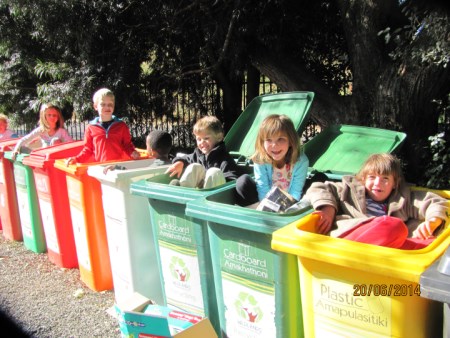 These eco-warriors at Hilton Pre-Primary have fun while compacting the recycling so that they can fit more in.
 Only eight men stayed to play on Tuesday afternoon in icy conditions. On Thursday and Saturday we had clear skies and warm weather and thus many more players.
 The children at
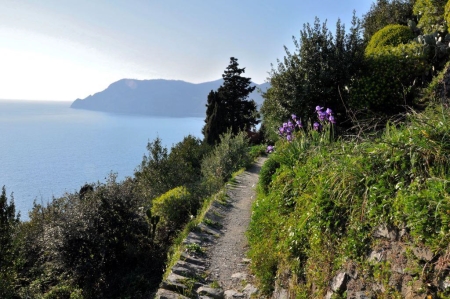 The Cinque Terre offers some of the most delightful walking in Italy. Five small, impossibly beautiful villages linked by footpaths clinging to the land above the azure Mediterranean make this a walkers paradise.
 At this time of year it is actually very difficult to dodge the bugs. The big question is do you need an antibiotic or not.
 This is a timely reminder that fire season is well underway, so please do not light fires until we get our first spring rains and the risk is sufficiently lowered. If you need to deal with leaves and other garden waste, why not use the opportunity to make a compost heap or use a chipper to make mulch for your flower beds, which retains the moisture and warmth to protect plants during winter.
 Hilton's Village Centre opposite the old station in Hilton Avenue has been revived, now boasting a new layout and the welcome addition of fresh tenants. These include Huddy's bookstore, Wakefields, a modern KwikSpar, TOPS liquor outlet and Rosewood, owned by local lady, Caitlyn Gilson.
 Melissa Vurovecz, Hilton's Mrs SA Finalist 2014 enjoyed the TOP GEAR DURBAN FESTIVAL with her husband Ski and shared the following comment on Facebook, 'It's always good to support your spouse in their passions. My husband is so supportive of my passions that it's only a PLEASURE to return the favor! Ski is a petrol head and on the weekend we went to Top Gear Durban Festival together. This was a date I marked off in the calendar for nothing else except Top Gear because I know it's what he loves! MAKE TIME FOR YOUR SPOUSE'S PASSIONS, it will make you happy to see them happy!'
 The Barn Restaurant at The Rotunda is a brand new "fresh look" kind of place which has a combined theme of country and family style meals. During the day it can be seen as a bright and sunny coffee shop which then welcomes customers to a warm, hearty restaurant on Friday, Saturday & Sunday nights. We are open from 07h30 during the week for early morning coffee meetings and delicious wholesome breakfasts.
 Cowan House
 Thirty-Two St Anne's girls travelled to Johannesburg last weekend to compete at the Independent Schools' Sports Festival hosted at St Andrew's. Teams competed in Netball, Hockey, Squash and Tennis and had good competition across the disciplines. The St Anne's hockey team in particular dominated their competition, winning all but one game against St Stithians, that ended in a nil all draw.
 The July holidays are fast approaching which means that time to register for ASP's winter revision school is fast running out! The deadline for registration is the 23rd June 2014 and classes run Monday the 30th of June to Thursday the 3rd of July. Here's five reasons why we think it's beneficial for learners to knuckle down and get revising during this mid-year break.
 The IF Nominated Trips tournament on Friday morning was won by Dave and Margie Garrard, playing with Colin Watson. Second prize went to Thelma and Mike Mylne and Dave Stevenson. Well done to all the winners and thanks to Investment Facilitators for their generous sponsorship. The Ladies' league team played at Lynwood on Saturday, and won one rink but lost the other. However they had the greater shot total, and collected 3 points. The Men's fourth league team had a similar result against Maritzburg, snatching the deciding shots in almost total darkness on the replayed last end. Congratulations to our winning teams.