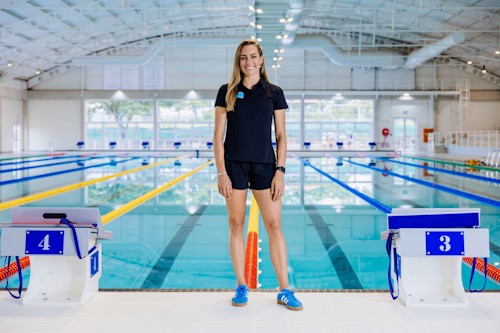
 Pietermaritzburg facility is already being used by elite athletes while opening up world-class aquatics to schoolchildren, beginners and families.
With South Africa recently announced as one of the countries exploring a bid to host the 2036 Olympic Games, sporting infrastructure and its potential legacy are back in the spotlight.
In Pietermaritzburg, AquaPark – the brainchild of St Charles College Board of Governors and Executive Head Allen van Blerk, who envisioned a world-class aquatic hub for the region – is already contributing to that conversation.
AquaPark is a place where athletes can potentially qualify for LA 2028 and future Olympics. Its development is an example of the kind of investment in sporting infrastructure that can have a lasting impact in building a South African aquatics ecosystem.
The aquatics centre is home to the 50m competition pool used at the 2023 World Aquatics Championships in Fukuoka, Japan. But AquaPark is looking beyond just elite swimming, with the facility catering for everyone from children and adults learning to swim to Olympic and Paralympic athletes.
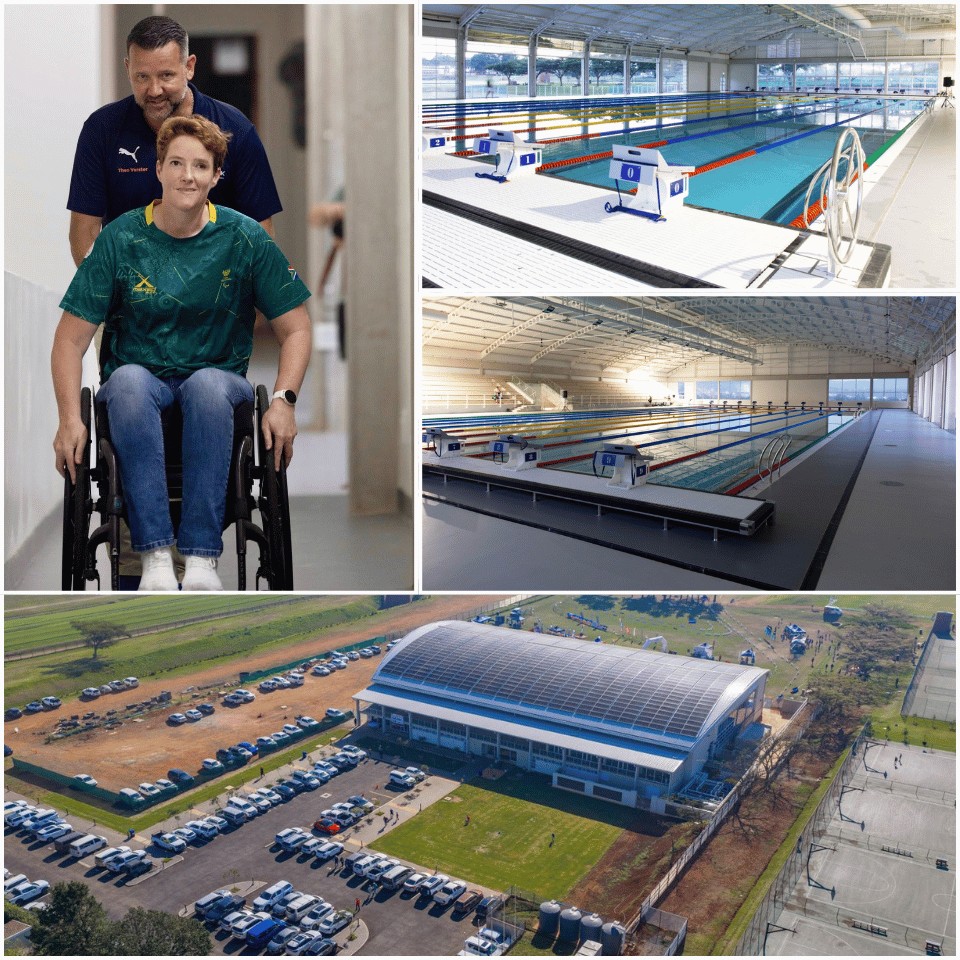
The 50m Myrtha pool was transported to the country in seven containers and assembled on site in just seven days. A 12.5-tonne movable bulkhead allows it to be converted from a 50m to a 25m configuration in around 17 minutes, making the facility, which took a total of 11 months to complete, adaptable for different forms of training and competition.
The pool has already received the official nod from returning Olympic champion Tatjana Smith, who is a brand partner for AquaPark. She knows the pool well, having claimed her first world title (and the first ever by a South African woman) in it – when it was still in Fukuoka during the World Championships back in 2023.
During the recent SA Short Course Swimming Championships in Pietermaritzburg, the four-time Olympic medallist as well as former Para swimming world champion Kat Swanepoel used AquaPark as a warm-up facility.
For Smith, who returned to competitive swimming just last month after a two-year absence, having facilities of this standard in South Africa represents a significant change.
"I never thought I'd be preparing for another race, never mind in a pool like this, so I'm always happy to be here," she said.
Speaking at the launch of the pool earlier in the year, she pointed out: "My one reason for why I swam was that I've always wanted to prove that we can from South Africa with limited resources... But now we have access to tools that we never had access to, like a facility like this, so to have world-class in South Africa, it just tops everything."
Smith believes the benefits could well be felt by the next generation of athletes.
"Everything aligned and it's something bigger that's happening here and something that's going to change the aquatic sports, I think, forever in South Africa."
That next generation is already using the facility. AquaPark caters for club swimming, masters swimming, nipper swimming, learn-to-swim and water polo, while a lifesaving club is also being developed.
For former Olympic swimmer and AquaPark CEO Theo Verster, the key is to make the facility about aquatics as a whole rather than swimming alone, and to make it accessible to all. A friendly, accommodating atmosphere, he believes, is key.
"I want people to understand that they're welcome... And it's aquatics. It's not just swimming," explained Verster. "That is what is going to make this place more viable and bring more families in because one family member can play water polo while the other one is swimming," he added of the non-profit facility that was completely privately funded.
Accessibility is another important part of the facility's design. Dedicated accessible ablutions are located on pool deck, while ramps and parking provide easier access to the building. Platforms can be positioned in the 2m deep pool to give less confident swimmers somewhere to stand as they become comfortable in the water.
Swanepoel says that accessibility is one of the facility's biggest strengths.
"Everyone talks about the facility, and yes, it's a world-class facility, but for me personally it's the accessibility," she said. "When an environment is built with accessibility in mind, it goes on to say that every member of our community is seen and valued...
"So to have an environment which is purposely designed and a community that is looking to be inclusive, just brings in way more people into the fold."
The longer-term plans for AquaPark include a dedicated learn-to-swim pool and an additional 25m warm-up and cool-down pool. The centre currently has seating for around 600 spectators, with the ability to add another 400 to 500 seats, giving it scope to accommodate larger national competitions.
But the ambition is not simply to produce more elite swimmers. It is to create a place where people can enter aquatics at any age and pursue it as far as they want – and to inspire others to do the same.
"We are now driven... to show that what we have built is hopefully a beacon of hope," said Verster. "Hope for other people in other provinces that they can also build a facility like this."
For Verster, the vision for creating a community-focused facility where the whole family is catered for is personal. He's got big plans for future additions and, inspired by what's already been achieved in a few short months, he's even back in the water himself.
"We want to make it a lifestyle stop... We're trying to bring the community into a safe environment and let them enjoy swimming. I'm enjoying it again after 22 years... It's like my happy place now.
"We've now brought a world-class facility right to the doorstep of every single South African and we've got it right here at AquaPark."
For more information: www.aquapark.co.za
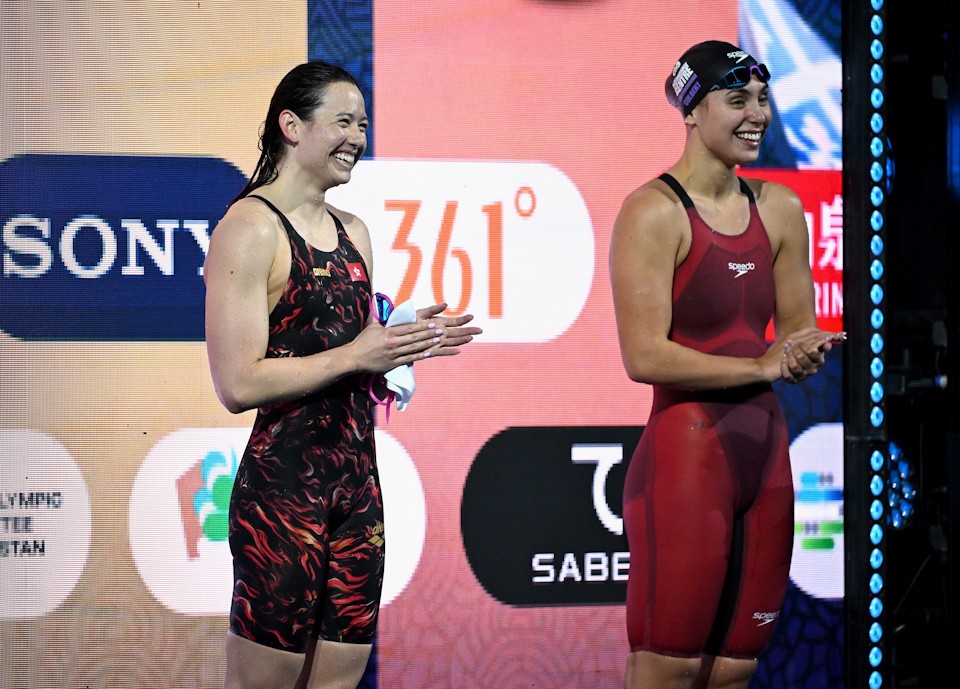
Top image: Tatjana Smith
Below: Theo Verster and Kat Swanepoel at AquaPark, Aquapark interior and ariel view.
 The 2026 Midlands Chess League will reach its conclusion on Saturday, 7 November, when Cowan House Preparatory School in Hilton hosts the Midlands Championship, the fourth and final leg of the season.

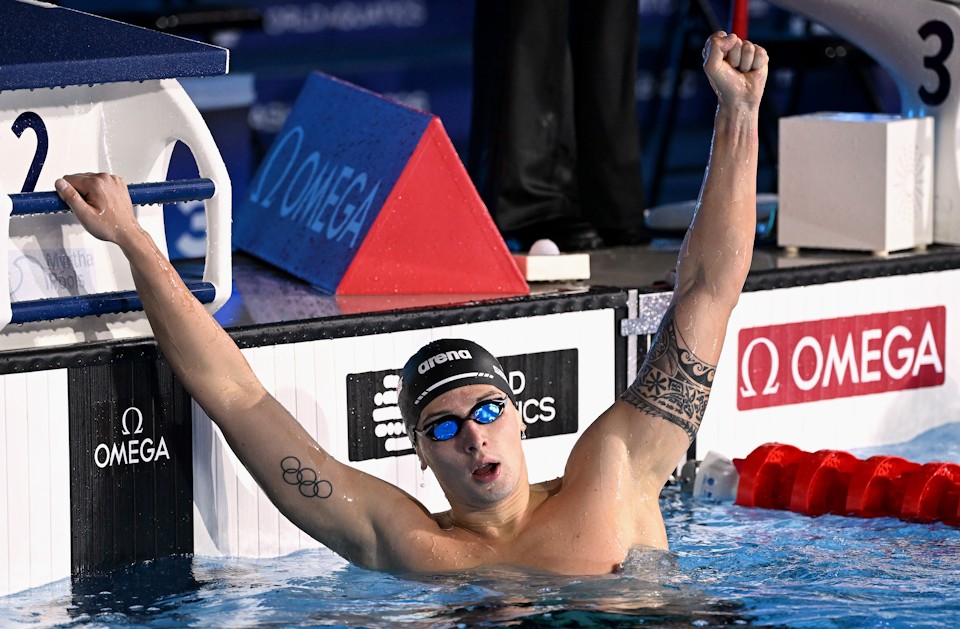
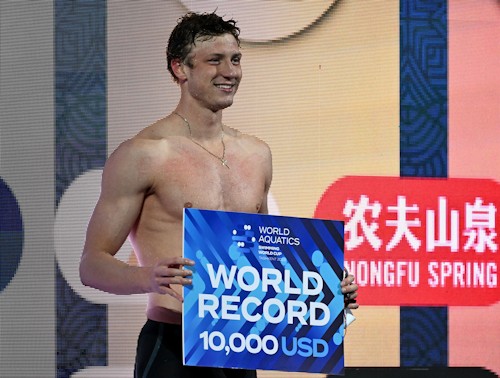 South Africa claimed two famous wins on Friday night in Uzbekistan as Coetze broke his first career World Record.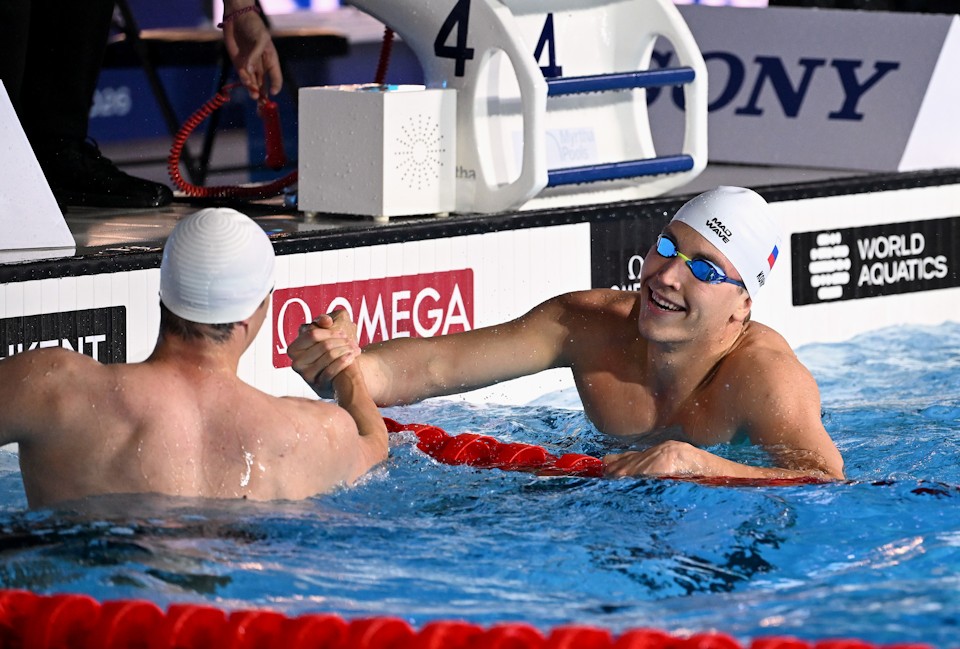

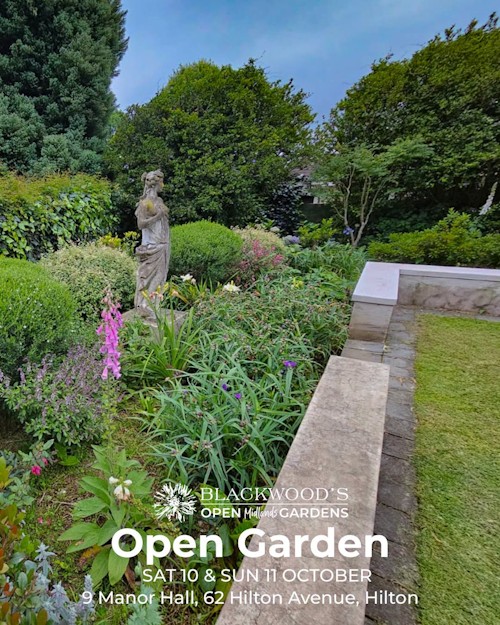 Upcoming Open Midlands Garden - Sat 10 & Sun 11 October. Located at Manor Hall in Hilton, this semi-formal garden owned by Vinnie Jones and Kathy Jacob combines structure and sustainability within a thoughtfully designed residential landscape.
 Limited-time GROUP DISCOUNT for Vusi Mahlasela and Guy Buttery LIVE CONCERT in KZN MIDLANDS






 For generations, South Africans have known how to welcome people, whether through a steaming pot of umngqusho shared around the fire or the careful sweeping of a verandah before guests arrived.