 The past weeks of lockdown have caused me to experience a lot of emotional stress. The lack of contact with my sons, and too much contact with fear-consumed members of my extended family, have both contributed to this. And that’s without giving attention to the emotional stress that relates to the many (uncertain) impacts of the coronavirus pandemic.
Apart from battling to sleep well when I experience emotional stress, (which causes me to feel tired, irritable and even more stressed the next day… which leads to more problems sleeping) I am very aware that if I allow my emotional stress to continue unchecked then it will trigger chronic inflammation within my brain and body.
At a biological level, research clearly shows that your body and brain will respond to mental and emotional stress as they would to a harmful pathogen, or to a direct physical threat, such as a mugger confronting you, with a “fight or flight” (stress) response.
Brief exposure to a difficult situation, as sometimes happens during the course of one’s day, results in a short-lived, i.e. acute, stress response. These moments of emotional stress may result in a temporary inflammatory process being triggered, but they are unlikely to have a long-lasting negative effect on your health or immune system.
It is when you experience ongoing or prolonged periods of emotional stress, such as most of us have experienced over the past month, that chronic inflammation is triggered and the functioning of one’s immune system becomes compromised.
So, two important questions to ask yourself now are: To what extent am I prone to experiencing chronic emotional stress? And, to what extent have I been experiencing chronic emotional stress during the lockdown?
Over time, chronic emotional stress creates chronic, systemic, low-grade inflammation that not only compromises the functioning of our immune system but makes us more vulnerable to almost every chronic health problem known to science, including depression, Alzheimers disease, various cancers, diabetes, and a multitude of auto-immune conditions.
What is absolutely critical to understand and acknowledge is that it is most often your thoughts about a difficult situation that will cause you to experience chronic emotional stress.
Consider where your thoughts have taken you when you have worked for an unreasonable boss, have had financial difficulties, or have suffered a chronic health problem. Consider where your thoughts have taken you over the past month. In each of these ongoing difficult situations, it is quite possible that you have found yourself regularly thinking about the situation and, as a direct consequence, experiencing some level of ongoing anxiety, worry, frustration and/or other unpleasant emotion.
This is chronic emotional stress, and it results in the ongoing release of the stress hormone cortisol and other chemicals that trigger and maintain chronic inflammatory processes within your brain and body and have negative effects on both mental and physical health.
So, how can you reduce chronic emotional stress effectively? Well, ongoing difficult situations will trigger your habitual ways of dealing with the unpleasant emotions, including thoughts and feelings, that arise within you. These are the habits of thinking and feeling that each of us has developed over the course of our lives.
These habits may be thought of as your “autopilot” reactions, and may involve a habitual avoiding or blocking of the difficult inner experiences (of thinking and feeling).
An equally common autopilot reaction involves getting caught up in the difficult thoughts and feelings (and unpleasant physical sensations). The habit of ruminating is an example of this.
What most people do not know, is that whether you avoid thinking about an ongoing difficult situation and/or ruminate upon it, the chronic stress response is still very much in operation!
So, you may be asking: what is the alternative? Well, it may sound counter-intuitive, but the acceptance of the unpleasant feelings and thoughts that arise within us all is an alternative response that has, in fact, been proven to be far more effective in limiting emotional stress.
I /
Emotional Avoidance
Acceptance of Difficult Emotions
Getting caught up in emotions
The most well-researched and most effective approach to accepting difficult emotions is what has been termed a mindful approach to emotional stress reduction. As such, I would like to encourage you to experiment with this mindful approach to by taking one or more of the mental steps listed below to calm yourself when faced with a difficult situation:
1. Remind yourself that emotional stress involves three separate but closely linked inner experiences; difficult feelings (e.g. of anxiety or frustration), unpleasant thoughts, and uncomfortable body sensations (e.g. butterflies in one’s tummy).
2. Recognise that your unpleasant inner experiences are normal and natural human reactions to difficult situations.
3. Note your autopilot reaction to these inner experiences, perhaps to try to avoid them and/or to get caught up in them, which often involves rumination.
4. Accept your difficult thoughts, feelings and body sensations as temporary experiences. (This step generally requires that you release your previous autopilot reaction/s.)
5. Hold your difficult thoughts, feelings and body sensations in your awareness while breathing deeply and slowly. (This quickly deactivates and calms the “stress centre’ in your brain called the Amygdala.)
I would love to hear of your experience as you experiment with taking some of the steps described above, even if it is just to breathe deeply and slowly during a difficult situation. Send me an email to This email address is being protected from spambots. You need JavaScript enabled to view it. and let me know.
Keep an eye open for my next newsletter delivered to your inbox in a few day’s time.
News supplied by Alistair Mork-Chadwick (Psychologist).
The most well-researched and most effective approach to accepting difficult emotions is what has been termed a mindful approach to emotional stress reduction. As such, I would like to encourage you to experiment with this mindful approach to by taking one or more of the mental steps listed below to calm yourself when faced with a difficult situation:
1. Remind yourself that emotional stress involves three separate but closely linked inner experiences; difficult feelings (e.g. of anxiety or frustration), unpleasant thoughts, and uncomfortable body sensations (e.g. butterflies in one’s tummy).
2. Recognise that your unpleasant inner experiences are normal and natural human reactions to difficult situations.
3. Note your autopilot reaction to these inner experiences, perhaps to try to avoid them and/or to get caught up in them, which often involves rumination.
4. Accept your difficult thoughts, feelings and body sensations as temporary experiences. (This step generally requires that you release your previous autopilot reaction/s.)
5. Hold your difficult thoughts, feelings and body sensations in your awareness while breathing deeply and slowly. (This quickly deactivates and calms the “stress centre’ in your brain called the Amygdala.)
I would love to hear of your experience as you experiment with taking some of the steps described above, even if it is just to breathe deeply and slowly during a difficult situation. Send me an email to This email address is being protected from spambots. You need JavaScript enabled to view it. and let me know.
Keep an eye open for my next newsletter delivered to your inbox in a few day’s time.
News supplied by Alistair Mork-Chadwick (Psychologist).
 Just to give some clarity on what happened at the Rotunda Centre.
 With the implementation of the national lockdown to flatten the curve of the COVID19 pandemic, many families have been left destitute without the means to earn an income and provide for their families.
 Selected Build it stores are now open to supply essential service providers as stipulated in the Government notice.
 During the course of the past two weeks I have quickly come to see how my early morning run, that I used to enjoy prior to the lockdown, boosted my energy levels for most of the day.
 Tanglewood Nursery Lockdown Special!! For those of you who are busy planning your gardens during lockdown time, we are offering an amazing "Buy now, Plant later" deal!! Buy a voucher of any value and get 25% off!! Offer valid until Lockdown ends!
 By now we know Covid-19 will have a substantial impact on our economy, we see lockdown periods extended, many are wondering what our obligations and responsibilities are?
 The UCSI continues to support SAPS, Law Enforcement and Security Service Providers. Our Operations team is working 24/7 to make sure we stay on top of things. Even with reduced traffic flow all over the country, the UCSI have been able to follow up and facilitate the apprehension of some perpetrators.
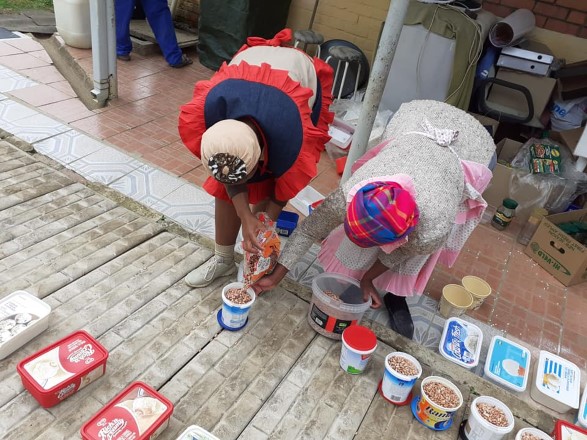 Lockdown is hard on everyone,especially children and families who have nothing.
 The COVID-19 pandemic and the resulting lockdown has had an unprecedented impact on how businesses operate. Negatives aside, this pandemic is an opportunity to push workspaces into the future with new health technologies.
 I woke up in the middle of the night last night and then tossed and turned for what seemed like a very looong time until I eventually fell asleep again… and then I woke up very early, long before I wanted to!
 Local family-owned restaurants need all our support during the COVID-19 crisis. This initiative has been created by Denny Mushrooms to help raise awareness and funds for the many eateries affected.
 As the regulations have been updated to make allowances for informal food traders and small-scale farmers, the REKO Hilton group is being re-activated. To avoid being considered a gathering, REKO will now operate as a DRIVE-THRU collection, starting Thursday 23rd. Please take note of the following if you intend to participate:
 CHILDREN’S BRAINS ARE NOT IN LOCKDOWN and as our charity aims to train practitioners, parents and caregivers at a grassroots level to provide fun, educational activities that enable young children to learn through play, supported by resources made solely from recycling, our work is even more important at this time.

 With all her home and kitchen projects up to date Sarah Inman, partner at Birnam Interiors, decided to try something different and using up her scraps she designed a delightful dachshund. The first product received enthusiastic acclaim from friends and family, inspiring Sarah to challenge herself to make one each day of the lockdown. Somewhere along her way Sarah became so absorbed and by yesterday had made 23.
 You’re sitting at home wondering “what next, what do I do, what’s this virus all about?”
 CG Carers is an ‘Essential Service’, this means we can continue to operate during the lockdown.
 Love Howick Hunger Busters has handed out 134 food parcels to homeless/poor folk in the CDB comprising of a variety of items. These are: apples, bananas, bread, cheese, eggs, frozen homemade soups and stews, maize, peanut butter, potatoes, tinned baked beans, tinned pilchards, toothpaste, soap, sugar and tea bags.