 We are tired
 by Motheo Makwana (Portfolio Head of Transformation and Diversity) and Hlumelo Notshe (Head of School)
“Personal transformation can and does have global effects. As we go, so goes the world, for the world is us. The revolution that will save the world is ultimately a personal one.” ~Marianne Williamson
We are tired.
We are tired of our throats running coarse as we preach words of equality and justice, only to have them fall onto deaf ears. We are tired of feeling afraid or being made to feel inferior. We are tired of having our hearts broken, time and time again, as we watch the slaughter of our brothers and sisters.
We are tired.
Tragedies like George Floyd or Breonna Taylor are symptoms of the same disease. It is a disease that silently infects us, crippling us from the inside-out. What is scariest, is that we cannot protect ourselves against this disease by, simply, wearing masks or sanitizing our hands. This disease is engrained in the minds of people and entrenched in the systems of society. Therefore, it is a plague that touches us every minute of every day.
Like any disease, we cannot cure it by simply addressing the symptoms. Rather we need to look at the problem holistically. Firstly, we need to understand that race discrimination and police brutality are not only American issues. It is as widespread as COVID-19. It affects almost every crevice of the world -- let us not forget the South African struggle.
Secondly, we need to remember that when treating a disease, we need consistency. We are dealing with structural discrimination. The suffering of people does not end when the Instagram challenge has stopped trending. Therefore, our continued activism and support cannot end there.
Finally, we need to realise that this is not simply a race issue. This disease affects our women, the LGBTQIA community, the poor – all those oppressed by the systems of our society. Humans are complex beings. We are not defined by one aspect of our being. We are not simply black nor simply men. Intersectionality dictates that we are both and so much more at the same time. Therefore, to truly cure this disease, we must not only focus on one issue at a time but rather challenge injustice in any way, shape or form.
There is no true liberation for one, without liberation for all, everywhere.
This may appear to be an overwhelming task. However, we believe we are all capable of affecting change. It starts with a fundamental mindset shift and liberating the mind. This only, truly, happens through education. Think for yourself. Educate yourself. Read, watch, listen, discuss and learn. Information is everywhere and is easily accessible. Ignorance is no longer an excuse.
It is time to live the equality we so desire. George Floyd’s murder did not just happen. It was borne from a prejudice that has been nurtured and slowly grown over time.
You have the power to stop such future tragedies by stunting them at grassroots level. Educate those around you, challenge their prejudice and confront them when they tell a sexist joke or make a racist comment. In situations like this “neutrality” does not exist.
We understand that it can be uncomfortable, it can be hard and emotive, however that is precisely what transformation is. Now, more than ever, it is clear this disease has run rampant – our world is sick. Discomfort is no longer an excuse.
Although circumstances may look grim and our bodies and minds feel heavy, saturated in our exhaustion, we must not, we cannot stop fighting. Call us naïve, but we wholly believe in the inherent kindness and love imbued in the human spirit, reinforced in the African soul. It is time we let this love shine through.
As a school, we are tired. Nonetheless, we will continue to fight, for we are hopeful. We are hopeful that one day our voices will be heard. We are hopeful that one day we will not be made to be afraid or inferior. We are hopeful that one day we will not feel oppressed by our differences but rather empowered by them.
Ike ixarra ike (unity in our diversity).
Forever standing with you.
The End Of Deafness
by Paul Venter (Staff representative on Hilton Students’ Transformation and Diversity Committee)
Four years ago, Colin Kaepernick knelt during the playing of the Star-Spangled Banner in silent protest at the death of African American people at the hands of the police. His actions while lauded by many were criticized by others as being unpatriotic and offensive. His NFL contract was not renewed. Kaepernick followed in the tradition of a long line of courageous figures from Rosa Parks refusing to give up her bus seat to a white man in Montgomery, Martin Luther King Jr speaking from the Lincoln Memorial, and the African American athletes who raised the Black Power salute, in solidarity with the Black Power Movement, during a medal ceremony at the 1968 Mexico City Olympics. In all of those iconic events the protestors were vilified as being un-American, whereas in truth the were being the epitome of patriotism by attempting to make the United States of America stand true to its founding ideals of liberty and freedom from want for all.
The tragedy is that Kaepernick’s protest in support of the Black Lives Matter movement fell on deaf ears and one of the terrible consequences of that deafness was the murder of George Floyd last Monday. Both in the United States and around the world there has been an outpouring of grief, anger and outrage as thousands of people have taken to the streets in largely peaceful protest. In far too many cases that protest has been met with baton charges, rubber bullets and tear gas. The response to the looting that has occurred in certain areas has been an outpouring of criticism on social media, but not a critique of what has led to the looting. Trevor Noah best summed up many peoples’ deafness when he said that people get angry about the looting but never acknowledge the fact that black bodies are being looted daily.
In our own country, the spirit of the Freedom Charter flows through the Bill of Rights which underpins the South African Constitution. Within the Constitution the Right to Life is sacrosanct, yet since the lock down began, Collins Khoza, Elma Robyn Montsumi and others have died. In a country whose past is littered with massacres from Bulhoek, Sharpville, Boipatong to Marikana, the silence about these tragic deaths has been telling.
Peoples deafness is no longer tenable. No longer can any of us use the words “Yes but” when engaging with people who are speaking out in pain, grief, frustration and fear. We have to call racism and violence for what it truly is: namely an attack on our shared humanity.
We stand in solidarity with all those peacefully protesting around the world, we reaffirm that Black Lives Matter and that violence by those who are entrusted to protect all the citizens of the world must end.
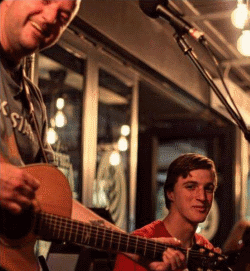 MiTH will be live this week on Wednesday. To join this event, simply visit the MiTH FB page at 7:00pm on 8 July 2020, and click on the live streams...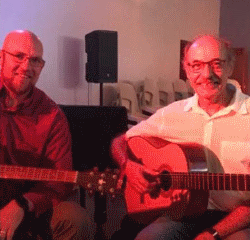
 I am a Hilton-based dealer in coins, medallions, banknotes, tokens and military medals. So how did a trained mathematician and physicist with a career as a professor of computer science stumble upon that as an end-of-life occupation? The answer is simple. I decided on retirement that, if old age was likened to a second childhood, I should take that to be literally true. I collected coins as a boy, so here I am enjoying the hobby all over again and supplementing my pension to boot. Along the way, over 15 years, I have encountered some interesting people: the man who printed the Rhodesian banknotes; a lady whose grandfather was at Mafeking during the siege; the curator of the Baynesfiels Estate Museum who had a collection of previously unknown tokens; an Australian on his uppers who had a rare and valuable Boer War tribute medal. The list is long because I have found that most of those who have things that I want to buy are interesting people.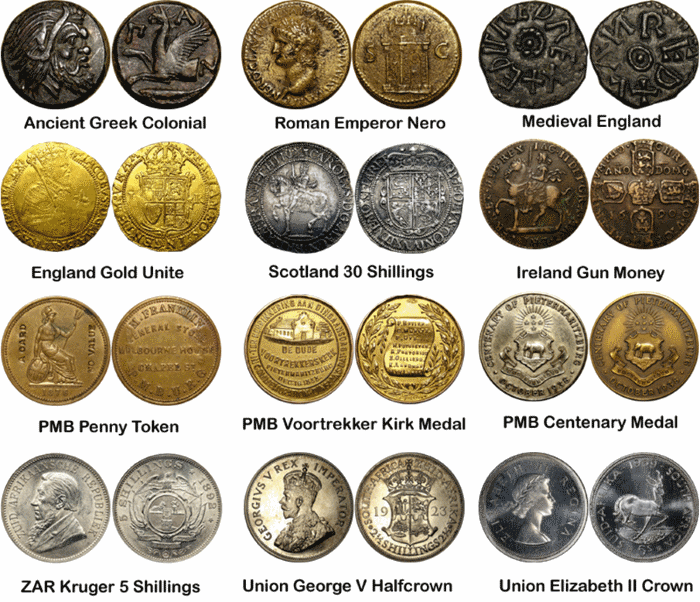

 The UCSI NPC is looking to employ a dynamic, motivated community-orientated individual to fulfil the role of Operations Manager.
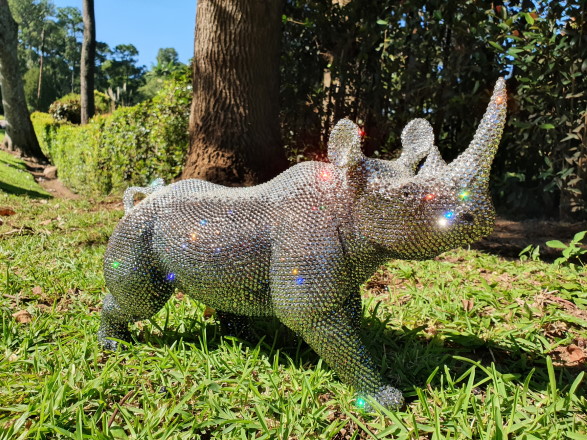 WILDLANDS, a programme of the WILDTRUST, recently launched an online auction to raise funds for the Somkhanda Community Game Reserve anti-poaching unit. This 12 000-hectare reserve which was formally proclaimed through the Land Reform process in 2005 by the local Gumbi community, has become one of the only community owned reserve success stories in South Africa. The reserve has become known for its conservation focused ecosystem management and forward-thinking interventions to protect wildlife and species vulnerable to poaching and illegal trade.
 June 2020 - Landlords and business owners are facing new uncertainties everyday due to the Coronavirus pandemic. Chief among these anxieties is how they are required to adapt interiors and buildings to comply with new international regulations.
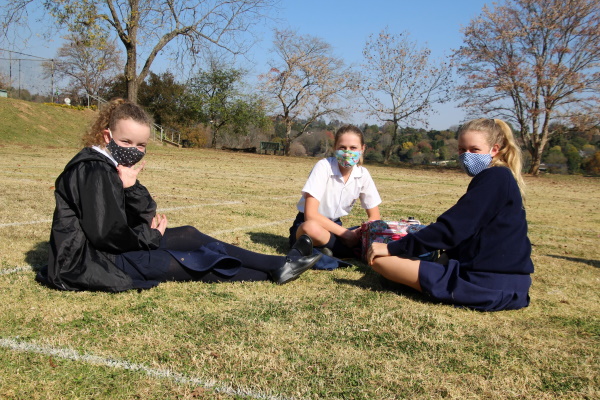


 Waste management and recycling have taken a huge step sideways since December 2019 when the pandemic first began. On the local front, many plants will close as sorting recycling by hand while maintaining COVID-19 health and safety standards is almost impossible. Recycling businesses that remain open are plotting a new way forward and need our active commitment to a healthier planet for them to survive.
 Krisna, known to most from her business
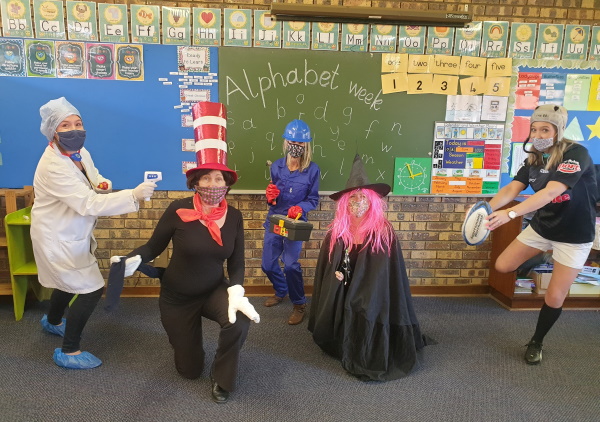
 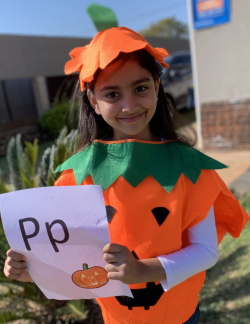 Laddsworth Primary School Grade One learners dressed up for Alphabet week, from 8 to 12 June 2020. The learners and their parents were very creative with their characters and outfits. The Grade One Teachers sent a video to parents with them acting out their Alphabet characters, to encourage the pupils to dress up. Laddsworth teachers send out videos to learners weekly with lessons and messages of encouragement.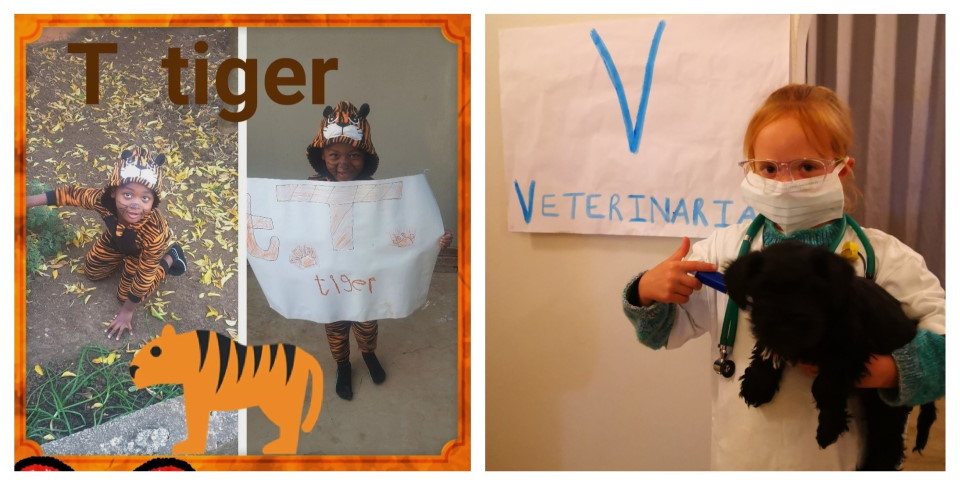
 We are so excited to announce that our Hilton branch has moved back into the vibrant space of
 Crime Tips from Hilton CPF
 Laddsworth past-pupil, Andrew Beyrooti, the 1st XV lock at St Charles College, has been offered a contract with The Sharks.
 How to heighten your happiness
 Our azaleas are all bagged up and ready for sale - we have lovely large, strong plants in 5 litre bags, in a variety of lovely colours!! They are R55.00 for the large plants and we have a selection of smaller plants at only R45.00 each.
 'If you never managed to get a newspaper this morning, this is why they were all sold out because of our fantastic write up in The Witness this morning! We thank each and every one of you for your valued support.